An evening for your familiesCertification for counselorsOther speaking
For schools & districts

When the classroom and the home run the same system.

The Family Agreement gives your teachers, your students and their parents one shared picture of what a good day looks like — the same expectations, the same words for a hard moment, the same way of putting things right afterwards. Written on your classroom wall, and on their kitchen wall, by the people who have to keep them.

Vida Forward · Family Systems Educator · Certified Life Coach
Listed with Western Suffolk BOCES Exploratory Enrichment.

Vida Forward, Family Systems Educator
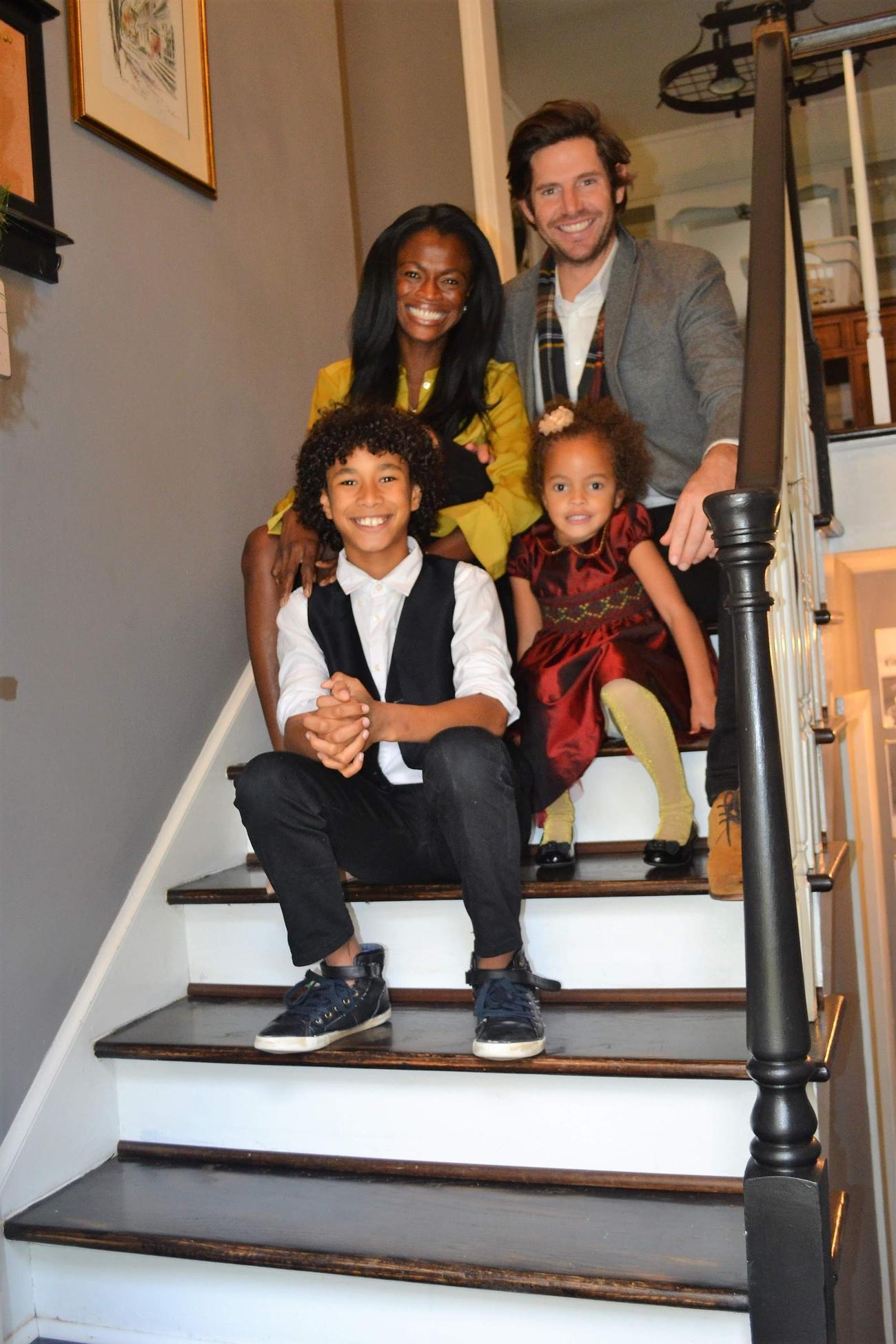
Vida Forward at home with her husband and their two children
Why your parents listen to me

I spent more than a decade in commercial real estate, and I was good at it. I could walk into a room of strangers, hold the thread of a complicated deal, and close it.

Then I would drive home to an eight-year-old son I argued with every single morning. I could close a million-dollar deal and I could not get a backpack through the door.

Nobody in your building is failing. They simply have a system in one part of their life and none in the other.

That is the person sitting in your auditorium. Excellent at work. Exhausted at home. Carrying Sunday’s argument into Monday morning, and quietly certain that every other family has it figured out.

I tell them the truth, which is that I did not have it figured out either, and then I show them what I built instead.
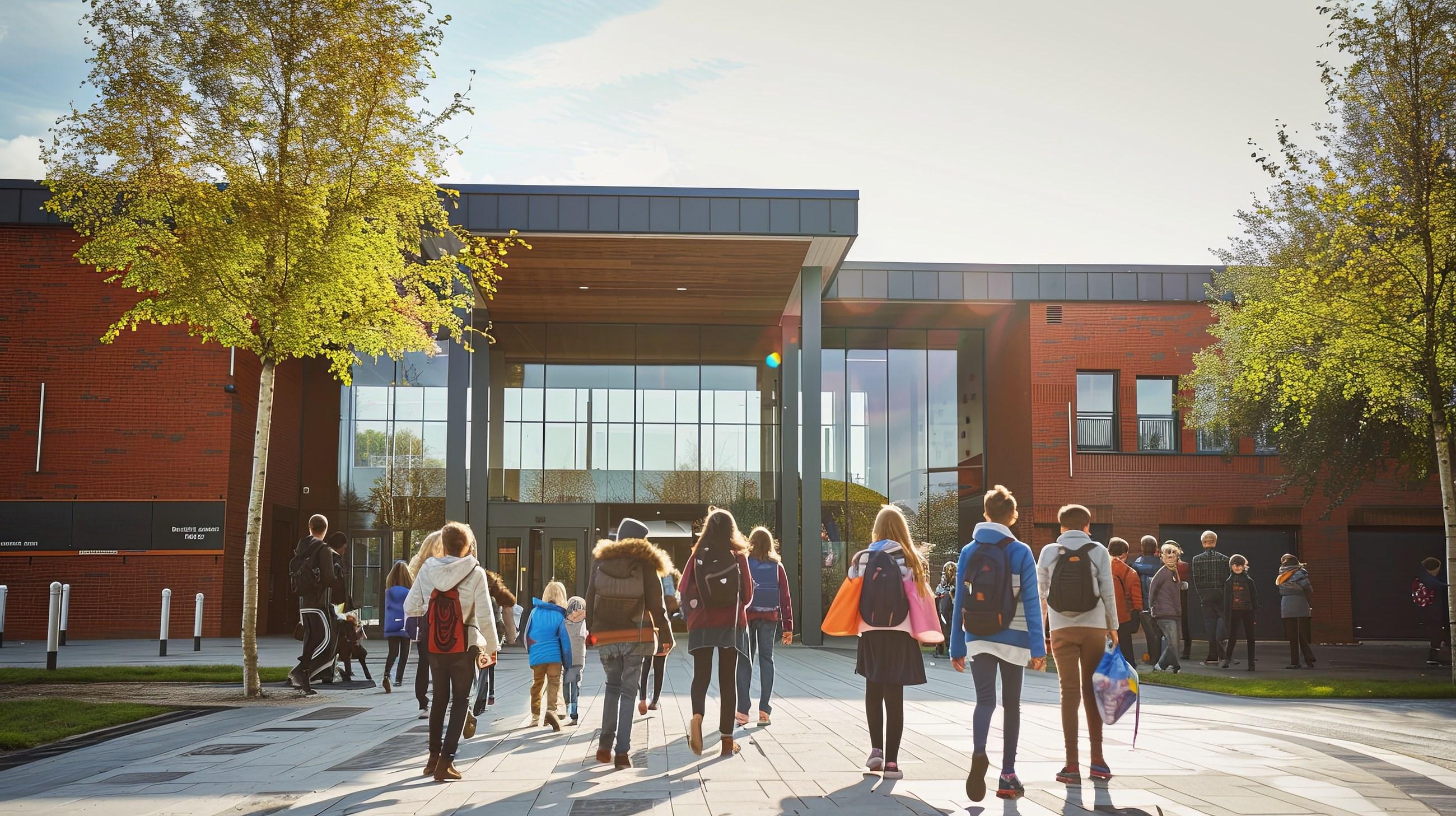

Students walking in through the front doors of their school
What it changes in your building

Give families a way forward — and your whole school feels the difference.

When families have a clear system at home, students can arrive more settled, parents feel more supported, and teachers and counselors carry less of what started the night before. You are not simply helping a family through today. You are giving them a way of living together they can carry for years to come. Your school gives families more than another program. It gives them a way forward.

Parents leave with something they can actually use at home — a shared language, clear expectations, and a system they can return to when family life gets hard.

Teachers get more room to teach.

When students have greater consistency and responsibility at home, they can arrive more settled and ready for the day. Less of home follows them into the classroom.

Counselors have something families can take home.

Not simply advice for the next difficult evening, but a practical system parents and children can sit down, build together, and keep using.

Parents begin to feel like partners, not problems to solve.

They come into school conversations with more clarity, more confidence, and language for what is happening at home. School and family can begin working from the same side.

Home and school start speaking the same language.

Children feel the difference when the adults around them are aligned. Expectations become clearer, communication becomes easier, and families feel more supported by the school community around them.

Family engagement becomes something families live — not just something they attend.

Months after the event, the conversation can still be happening around their table. The agreement can still be on the wall. The family can still be using what your school helped them begin.

The event may happen once. What you give families can stay with them for years.

That is the difference between another parent program and a family system: parents leave with a way to communicate, work together, and keep finding their way back to one another as their children grow.

A teacher in her classroom
01

It starts with a vision, not a rulebook

Before a single expectation is written, teachers and parents do the same short piece of work: This work is the gentlest possible beginning, and it changes how teachers and parents lead — because when the adults are leading toward something rather than reacting to something, children can finally stop bracing and start connecting.

A teacher working beside a student
02

Three instruments every adult and every student can use

These three instruments are the spine of the entire program. They teach my Strong Back, Soft Front Parenting™ framework — a methodology for how to return to yourself when you are frustrated, how to hear what your own voice is doing when you are angry, and how to work with your own mind to understand what is really happening. Teachers learn them, students learn them, parents learn them — and because everyone has the same three instruments, a child uses the same instrument in fourth period that they used at their own dining table the night before.

A teacher and her students at the board
03

Expectations written down, by the people who have to keep them

A class writes its own agreement the same way a family does. The agreement becomes that room’s philosophy: it says what the room is about — its culture, its beliefs and its systems. The teacher has a row too. Everyone signs it. It is not a poster of rules from the front office — it belongs to the room that made it.

A student and teacher high-fiving
04

And then the two rooms start to agree

The same eight conversations are happening around kitchen tables that evening. Suddenly a child is not switching between two sets of rules at 3pm. Respect means the same thing in both places. Repair looks the same in both places. Parents, teachers and students are finally holding one shared picture of what a good day looks like — and children settle when the adults around them are agreeing.

Why it works

People keep what they helped write.

This is the whole reason the agreement is written by the room rather than handed to it — and it is the part that matters most with the students who are hardest to reach.

Children defend what they helped build

This is the piece people underestimate, and it matters most with older teenagers. A rule handed to a fifteen-year-old is something to test. The same rule, in their own handwriting, with their name under it, is something they have a stake in. It stops being your rule and becomes theirs to keep — and a teenager will argue with you all day before they will argue with themselves.

Ownership is what makes it last

Decades of research on motivation point the same way. When adults hold behavior in place with pressure, what they get is compliance — and compliance stops the moment nobody is watching. When adults support a young person’s sense of ownership instead, the expectation is taken inside and carried. It is the difference between a class that behaves for one teacher and a class that behaves.

Adolescence is built for exactly this

Becoming their own person is a teenager’s developmental job, not a phase to be waited out. A system that asks them to help write the rules is working with that, rather than against it. It is also why structure is not a cage for a teenager — the part of the brain that plans and judges is still being built, so clear, agreed expectations act as scaffolding while it finishes.

On ownership and lasting change: Niemiec & Ryan, Theory and Research in Education, 2009.
On the developing adolescent brain: National Institute of Mental Health.

One system

The same board in two rooms.

A class fills one in together in the first week and signs it. A family fills one in at the kitchen table and signs it. Same handwriting, same promise at the bottom, and a child who recognizes one the moment they see the other.

OUR CLASSROOM AGREEMENTwritten together · signed by everyone in this roomHOW WESTARTHOW WESPEAKOUREFFORTPHONESRESPECTCONSE-QUENCESREPAIRWHAT WECELEBRATETEACHERSTUDENTSTOGETHERWe all agreed to this, and we all signed it:
On the classroom wall
OUR FAMILY AGREEMENTwritten together · signed by everyone in this houseFAMILYFUN NIGHTCHORESCURFEW &BEDTIMESCREENSSCHOOL& WORKCONSE-QUENCESFITNESSREPAIRPARENTSEACH CHILDTOGETHERWe all agreed to this, and we all signed it:
On the kitchen wall

Nothing is filled in, because the filling in is the point. Every room writes its own.

Everyone has a row

The teacher has one. The parents have one. Nobody is only being held to it — the adults signed it too.

Written by the room that keeps it

Not handed down from the front office or from a parenting book. Each room fills in the words that matter where they are.

A teacher laughing with her students
What your families leave with

Three things that bring so much more joy to a classroom and a home

The words

What to say in the moment it is going wrong, and what to do in the three seconds before they say it.

The tools

Strong Back, Soft Front™ — how to hold a limit and stay warm at the same time.

The system

The board and the agreement, built with their own family and signed by everyone in the house.

The words, the tools and the system. All three go up on the wall, in both rooms.

A teenager with her arms around her mother
From parents who have done it

What changed in their homes

These are families who sat down, wrote their agreement together and signed it. Here is what they say is different now.

“I’ve built systems my whole career — it never occurred to me I could run one at home. What sold me is that this one includes the adults, not just the kids. It’s settling in well with my family.”
Frank · father of four, New York
“The breathwork is one of my favorite parts because it’s so simple, but powerful. My children are watching me pause, breathe, and calm myself — and they’re beginning to model that behavior too.”
Jillian · mother of two
“Growing up, my mom kept every reminder in her head and spent all day yelling them at us. I could feel myself becoming that same mom to my twins. The Family Agreement changed that.”
Liz & Mike · New York
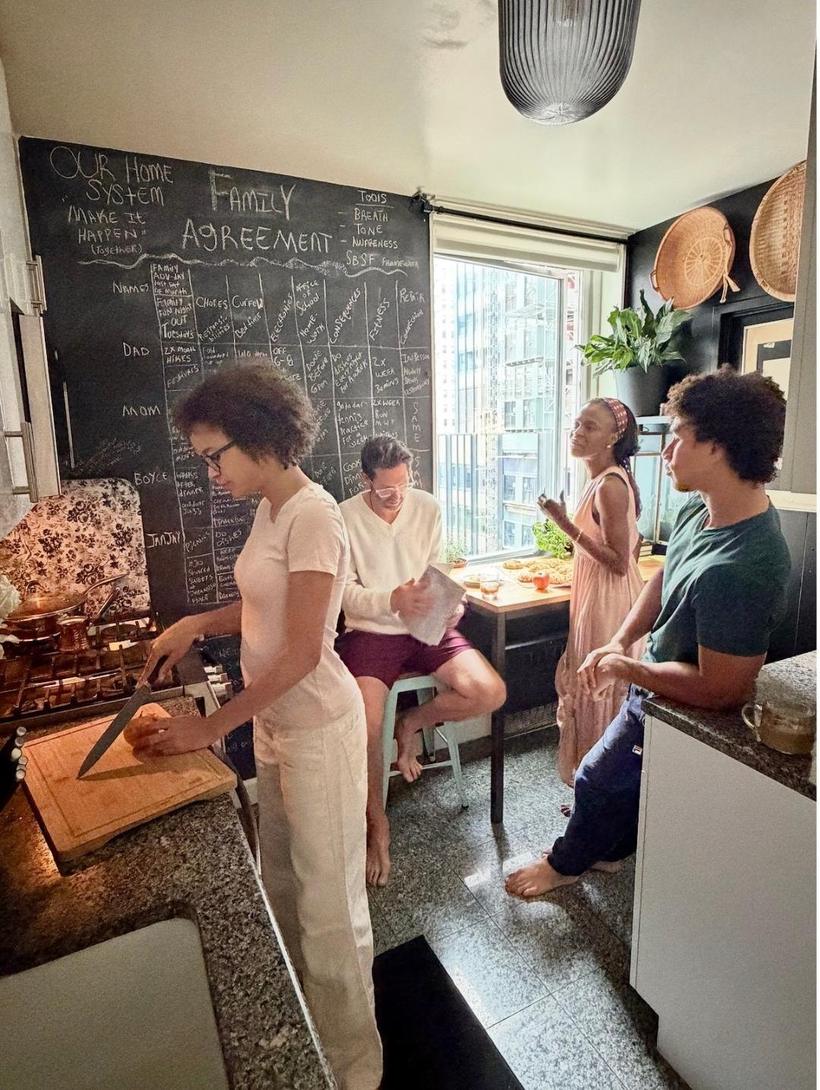
The Family Agreement board on a kitchen wall
Why it stays up

A family can have the conversation and still lose it by Thursday.

Most of us have had that talk. It goes beautifully, everyone means it, and a few days later it is as though it never happened. What holds is something a whole family can see, touch and negotiate together, placed somewhere everyone passes every day.

Ways we could work together

Start with one evening

Every school has a different year and a different budget, so I would rather talk it through with you than put a number on a page.

Start here

An evening with your families

60–90 minutes, in person or virtual

The talk, the board, and the thirty-minute family meeting script. Printed handouts for the room are included, and your team only needs to open the door.

For the whole school

The Family Agreement, all year

every family in your building

Your counselors run it with the materials and the scripts, and I come back once a year to keep it current.

Coming in 2027

Certification for your counselors

for counselors and social workers

So the person your families already trust can carry this themselves, with everyone who walks into their office.

What happens next

From your first email to the evening itself

1

You write to me

Your school, roughly how many families, and a couple of dates that could work.

2

I send one page back

What the evening looks like and what your families leave with. Nothing to wade through.

3

We sort the paperwork

Through your BOCES if you use one, so it is handled on their side.

4

I come and run it

You welcome your families. The rest is mine to carry.

I would love to hear about your school.

Tell me a little about your families and roughly when you are thinking, and I will come back to you with what an evening could look like.

Write to me about an evening

Or reach me at team@vidaforward.com
Vida Forward · New York · In person in the New York area, virtual anywhere