Not just a calmer home. A family that talks, shares the
load, works through hard moments, and enjoys being together.
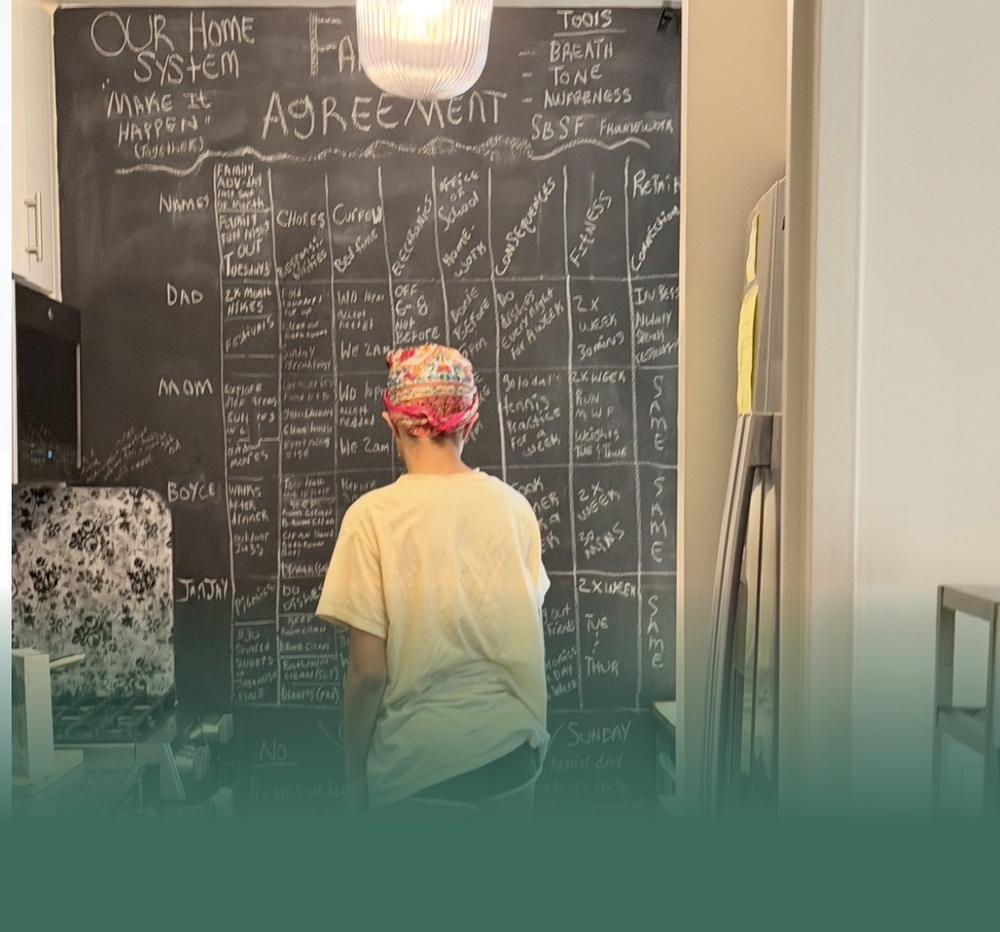
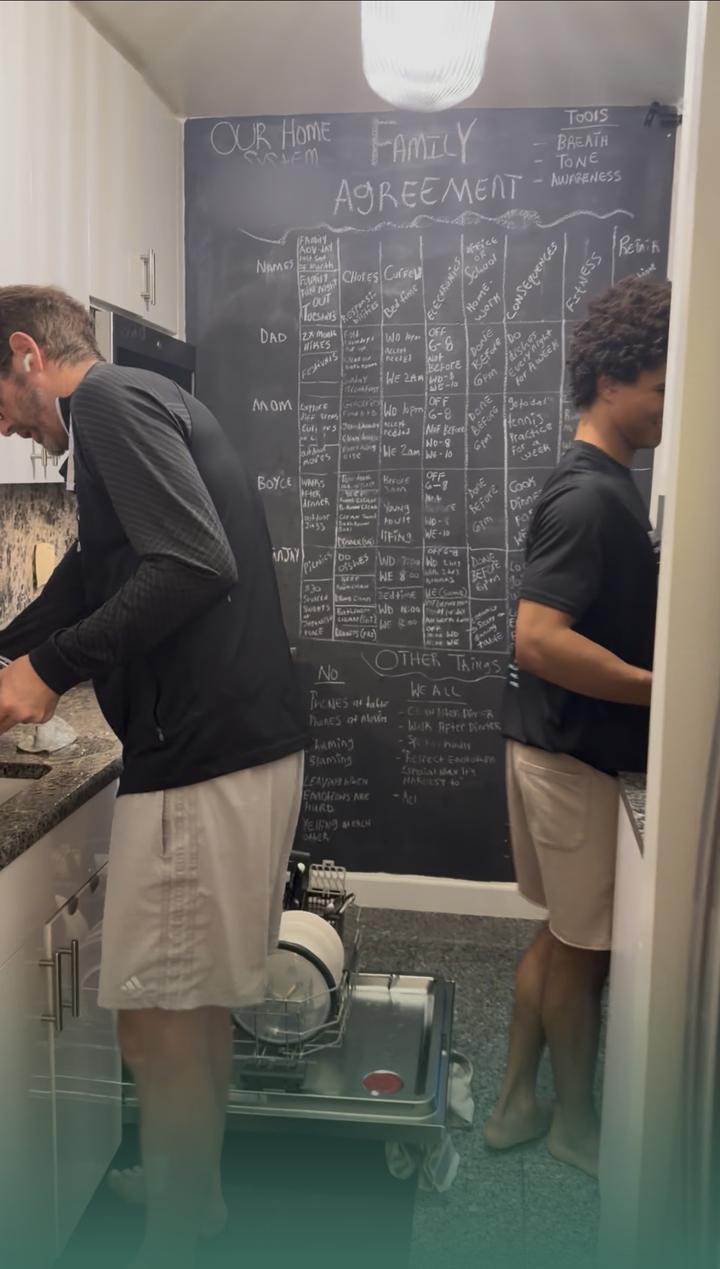
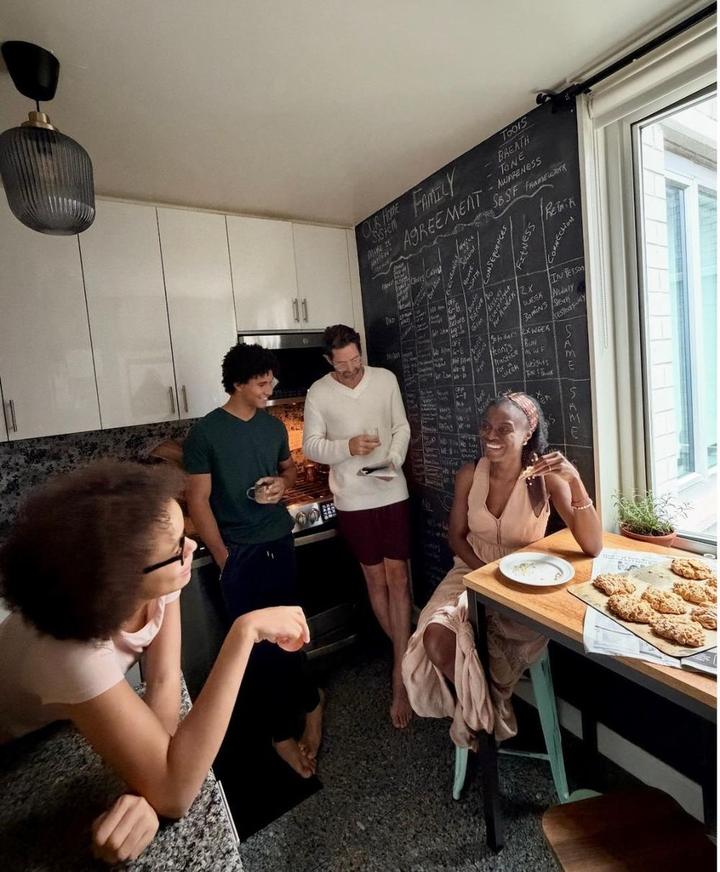
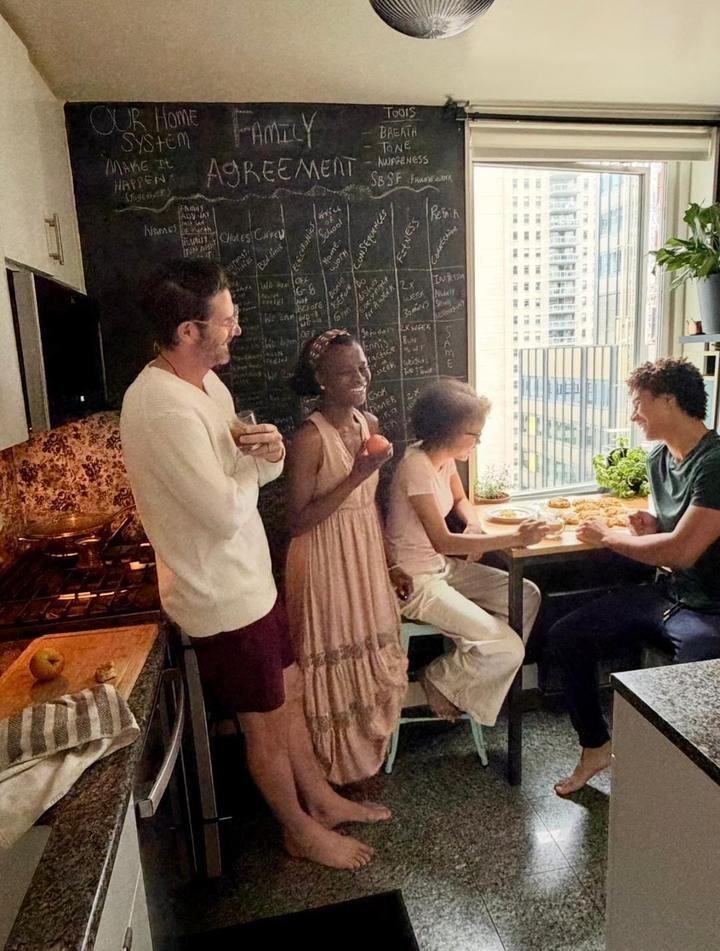
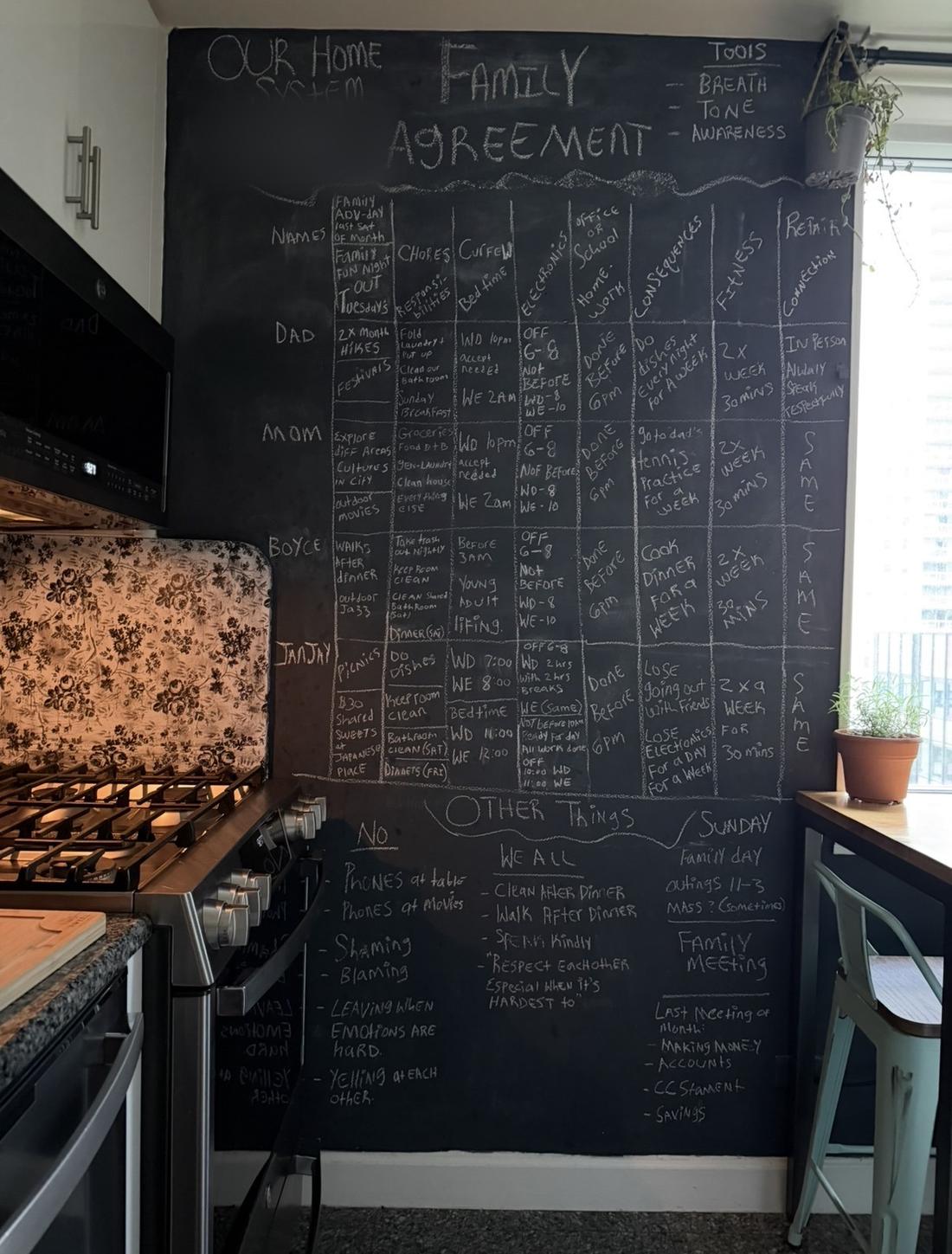
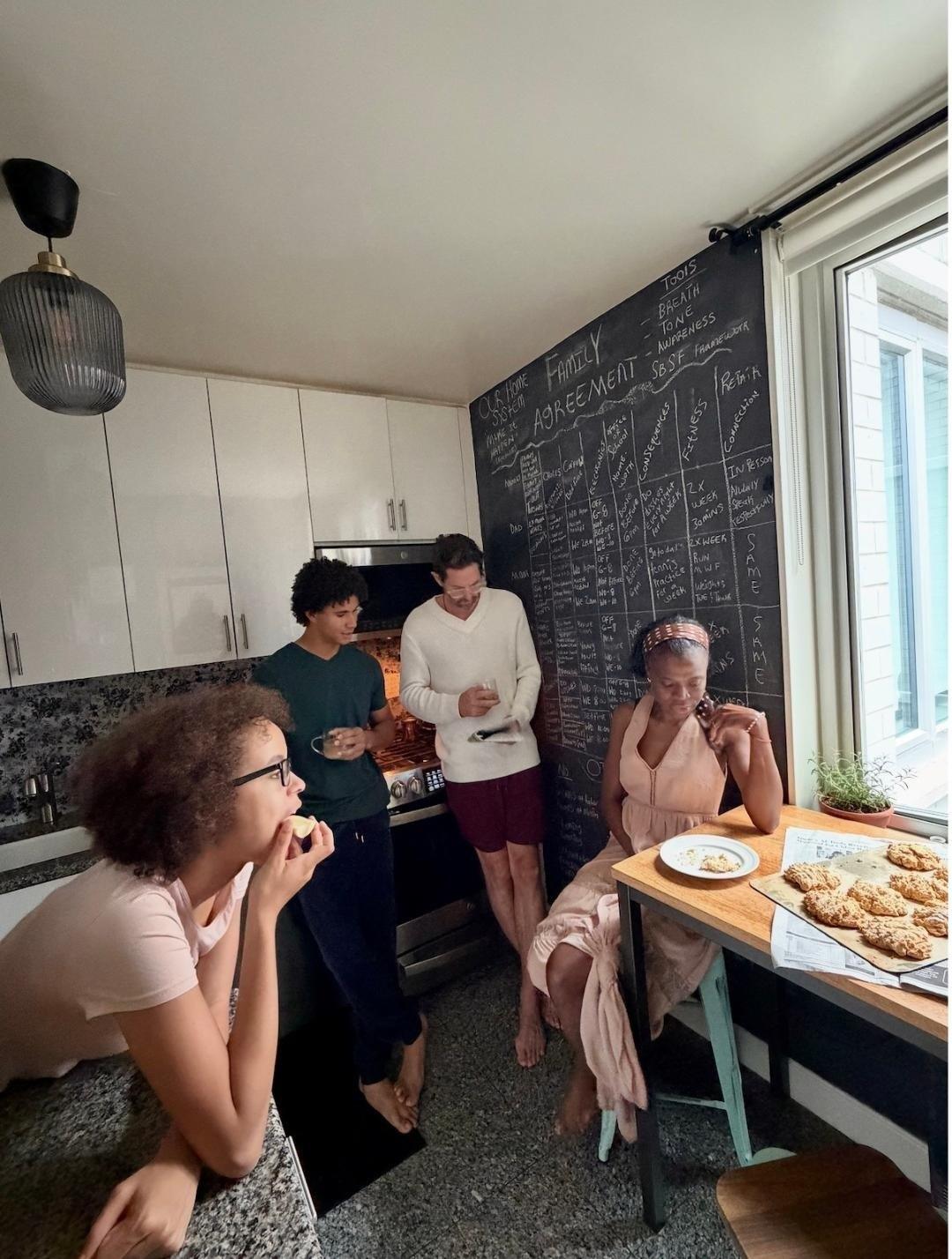
This is our kitchen, and these are the four things parents tell me
shifted first.
Chores get done
Because they are written down and everyone agreed to them, not because
you asked three times.
The talking comes back
When the rules stop being the whole conversation, there is room for a
different one.
Everyone knows where they stand
Nobody can say they did not know. It is on the wall, and their name is
at the bottom of it.
The house feels lighter
Predictable is the word parents use. A house that is predictable is a
house people want to be in.
Vida Forward · Family Systems Educator
Parents don’t just manage a household. They lead
the culture of their home.
I’m Vida. I teach families how to create clear expectations,
shared responsibility, and stronger connection at home.
The Family Agreement System™ gives your family something to come
back to. Instead of repeating yourself, changing rules in the moment, or
turning every disagreement into a battle, your family creates the
expectations together.
Your children have a voice. You still lead. Everyone knows what they are
responsible for.
That can mean less arguing, less negotiating, more accountability, and
more peace of mind for you as a parent.
Most importantly, your child knows what your family stands for, what is
expected of them, and that their voice belongs in the home. Because a
calmer, more connected home doesn’t happen by accident. It’s
something you build together.
Families need systems.
Start here · $37
Why The Family Agreement System
Everything you need to create clear expectations, stronger
boundaries and a calmer home. Here is what is in it, and what each part does
for you.
Build Your BoardBecause your teen can see exactly what they are responsible for. When a teenager has that clarity they feel respected and part of the home instead of managed — and that is what makes a house peaceful.
The Agreement everyone signsBecause they helped write it and their name is on it. A teenager will defend what they helped build, so the rules stop being yours to enforce and start being theirs to keep.
Strong Back, Soft Front Parenting™Because you can hold the line without losing the warmth. Your teen learns that a limit is not a rejection, and they stop bracing every time you walk into the room.
The 30-minute meeting scriptBecause you will know what to say and in what order. One calm half hour at the table replaces months of arguing in doorways.
The Recovery PlayBecause it will get tested, usually by week two. Knowing what to say then is the difference between the system holding and quietly falling apart.
What’s inside · $37
Parental Vision Board
The Family Agreement
Strong Back, Soft Front Parenting™
How to make money at home, not from chores
The Family Screen Agreement
The Recovery Play for when the agreement gets tested
“I’ve built systems my whole career — it never occurred to me I
could run one at home. What sold me is that this one includes the adults, not just the
kids. The How-to-Earn-Money Chart was the bonus: it finally separated earning from
chores in a way that made sense to everyone.
It’s settling in well with my family.”
Frank · dad of four, NYC
“The breathwork is one of my favorite parts because it’s so simple, but
powerful. My children are watching me pause, breathe, and calm myself—and
they’re beginning to model that behavior too. I also love that The Family Agreement
System™ holds everyone accountable for their role, so it doesn’t feel
punitive. It feels like we’re all working together.”
Jillian · mom of two
“Growing up, my mom kept every reminder in her head — and she spent all
day yelling them at us. She was miserable. I could feel myself becoming that same mom to
my tween and teen twins.
The Family Agreement System changed that. The breathwork settles me, and the Parental
Vision Board makes me feel like I actually know what I’m doing. My husband loves the
board too — now it’s what we talk about over breakfast.”
Liz & Mike · NYC
The Ask Vida newsletter
This is where your problem gets solved.
One parent sends me what is actually happening in their
house, and I work it all the way through — what is going on in their
teen, the words to use, and what to do when it gets tested a week
later.
A letter from Frank, father of a 15-year-old
Stop waiting for your vaping teen to confess
He found the vape. His son still says it belongs to a friend. Every
night since has been the same fight.
“Connection without authority is not a plan.
Authority without connection creates better liars.”
Send me what’s happening in your home with your teenager.
The argument. The closed door. The thing you have said a hundred times
that somehow makes you the villain by bedtime. Tell me the situation and I
will work it through in the newsletter — and you choose whether
your name is used.
If I choose yours, I email you a week before it goes out.
Why love isn’t enough
“Your tween or teen still wants to belong to the family.
They just need a new way to be part of it.”
The one-word answers. The closed door. The pushback. The
growing need for independence.
This season can make parents feel like they are losing the
child they used to know.
But your tween or teen is growing, and the way your family
works has to grow too. They need clearer expectations, more voice, more
responsibility, and a way to disagree without pulling the family apart.
The Family Agreement System™ helps you build a
home where your tween or teen can grow up without growing away from you.
Vida Forward · Family Systems Educator
If this is your house
You’ve said it a hundred times. Bring your plate in.
Get off the phone. You have school in the morning. And by bedtime
you’re the villain again — in a home full of love.
Your teen isn’t the problem. They have never seen the standard
written down, helped build it, or agreed to it. Every day feels like a new
set of rules — to them, and to you too.
That’s fixable today.
These are the eight arguments that run in almost every home with a
teenager in it. Written down and signed by everybody, they stop being
arguments and start being agreements.
The structure. You and your family fill it in together
— then it goes on your wall, where nobody can claim they did not know.
The research behind it
Tweens and teens are a field, not a phase to survive
None of this is a hunch. Three of the findings that shaped the system, and
what each one means for you on an ordinary Tuesday.
Their brain is still being built — and it starts in the tween years
The National Institute of Mental Health reports that the brain finishes maturing in the mid-to-late twenties, and that the prefrontal cortex — planning, prioritizing, judgment — is one of the last parts to get there. In a study of more than 5,000 people aged ten to thirty across eleven countries, the appetite for risk and excitement climbed from preadolescence and peaked at nineteen, while self-control rose slowly and did not level off until the early twenties. At ten, the youngest age measured, the two are already far apart.
Which is why nine is not too early. You are building the brakes while the engine is still getting louder.
You argue most in the tween years, not the teen years
A meta-analysis of studies on parent-child conflict found the opposite of what most parents expect. How often families argue is highest in early adolescence and falls steadily from there. What rises with age is not the number of arguments but the heat in them.
So the tween years are when you get the most chances to set the pattern — and the fewest of them are loud.
Research on motivation finds that when adults hold behavior in place with pressure, what they get is compliance — and compliance tends to stop once nobody is enforcing it. When adults support a young person’s sense of ownership instead, the expectation is taken inside and carried as their own.
Which is why your teen helps write the agreement, and why their name goes at the bottom of it.
What happens after the argument matters more than the argument
Decades of attachment research — from Bowlby’s secure base through Tronick’s work on rupture and repair — point the same way: security does not come from a home that never ruptures. It comes from the pattern of repair that reliably follows.
Repair is a skill. It can be taught, and it is in the system.
I could close a
million-dollar deal and not get a backpack through the door.
For over a decade I built a career in commercial real estate on one thing:
a clear, repeatable system. Then I’d drive home to an eight-year-old
son I argued with
every single morning.
One morning he turned to me in tears and said, “I don’t
know what’s expected of me. Every day feels like something new.”
He wasn’t failing. We weren’t failing. We simply had no system at
home.
So I built one. I have spent the years since teaching it to parents of
teens and tweens, and it is still on my kitchen wall.
Get my free 5-Minute Family Agreement Conversation Starter, then receive one
Encouragement Phrase Card each week — simple words to keep you and your teen
encouraged, connected and supported through the hard moments.