12 Things to Say When Your Teenager Shuts the Door
Most parents do not have a communication problem. They have a first-sentence problem. Here are twelve openings that keep a teenager in the room.

A parent told me last month that her sixteen-year-old had stopped talking to her. I asked what the last three conversations sounded like. She thought about it and said, “I asked how his day was, he said fine, and then I asked why he never tells me anything.”
That is not a communication problem. That is a first-sentence problem.
Teenagers decide whether to stay in a conversation somewhere in your opening line. Not the content of it — the shape of it. If the shape is question, question, complaint, they leave. If the shape is observation, pause, they usually stay a minute longer than they meant to. A minute longer is the whole game.
You are not trying to get information. You are trying to make the room safe enough that information happens.
“Why can’t you just talk to me?”
I understand it. I have said it. But it asks a teenager to account for a feeling they cannot explain, and it makes the distance itself the crime. Every time you say it, the door closes another inch.
Swap it for the first line on this list and watch what happens over a week. Not a night — a week. Teenagers move slowly on purpose. They are testing whether the new version of you is going to hold.
Your teenager’s brain is still under construction into their mid-twenties, and the part still being built is the part that manages impulse, plans ahead, and reads a situation accurately under stress. That is not an excuse for how they speak to you. It is a description of the room you are walking into. When you lead with pressure, the construction site takes over. When you lead with steadiness, you get more of the person and less of the reflex.
This is the soft front. The strong back — the limits, the consequences, the things that do not move — still has to be there. But the front is how you get invited in, and no system in the world works from outside a closed door.
Send me what is happening in your house with your teenager. I choose one at a time and work it all the way through in the newsletter.
Send your question →
Get my free 5-Minute Family Agreement Conversation Starter, then receive one Encouragement Phrase Card each week — simple words to keep you and your teen encouraged, connected and supported through the hard moments.

Your teen looks grown and sounds grown. The part of them that governs reason, impulse and calm is still under construction — and knowing that changes how you lead.
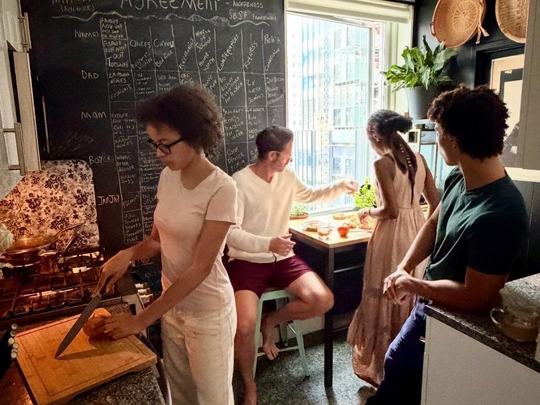
Tone is processed faster than words. The same instruction, delivered two ways, produces two entirely different evenings.

Not written down means negotiable. Here are the eight things that stop being an argument the moment they are on a board everybody can see.
Send me what is happening in your house. I choose one question at a time and work it through on the newsletter — the situation, the words to say, and what to do when it gets tested. If I choose yours, I email you a week before it goes out.
Ask Vida