Your Teenager Is Not Lazy About School. The House Is Missing One Thing.
Grades are an outcome. Effort is a behavior. Most families fight about the first and never describe the second — and that is the whole problem.
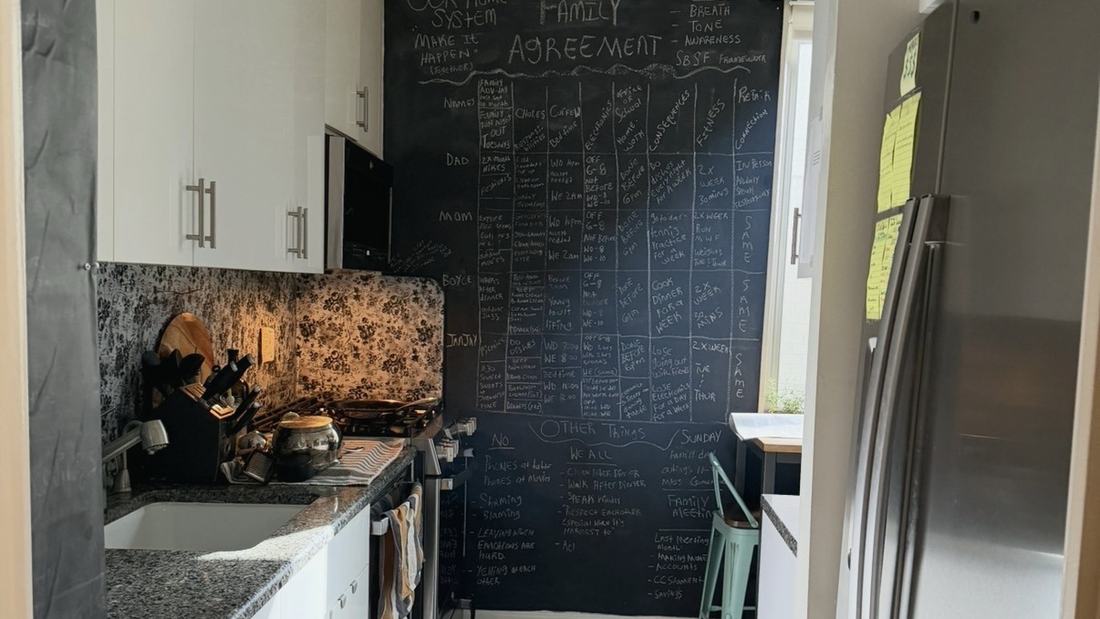
Every fall I hear the same sentence in some version: He’s smart, he just doesn’t care.
He cares. Ask him at eleven at night when the lights are off and he will tell you he is behind and does not know how to catch up and has decided it is easier to not try than to try and still be behind. That is not laziness. That is a fourteen-year-old managing shame with the only tool he has.
A described behavior.
Almost every family I sit with is fighting about grades. Grades are an outcome. You cannot legislate an outcome, you can only be disappointed by one, and a teenager who is being held responsible for something they do not know how to change will eventually stop engaging with the conversation entirely.
You cannot enforce a B. You can enforce an hour at the table.
Effort is a behavior, and behaviors can be written down:
Notice that none of those mention a grade. That is deliberate. Your teenager can succeed at every one of them on a week where they still get a C, and succeeding is what rebuilds someone who has decided they are bad at school.
The prefrontal cortex — the part that plans, sequences, resists distraction and gets started on something boring — keeps developing into a person’s mid-twenties. Your teenager is not choosing not to start. Starting is the specific thing their brain is still learning to do.
Which is why environment beats motivation every time. A set hour, a set place, and the phone somewhere else does more for a struggling student than any conversation about their future, because it removes the moment where they have to generate the initiative themselves.
Sit down with your teenager and write the effort behaviors together. Let them argue about the hour. Let them pick the place. Ask what would actually help and listen to the answer, because a teenager who helped design the hour will defend it, and one who was assigned it will spend the season negotiating it.
Then attach the consequence in the same conversation, while everybody is calm. Not a punishment invented at nine on a Wednesday when you are already angry — an agreed, boring, predictable consequence that everyone saw coming.
Give it a month. Do not comment on the grades. Comment on the hour.
The grades follow the hour. They almost always do.
The board, the agreement everyone signs, the 30-minute meeting script and what to do in week two when it gets tested.
Start With The Family Agreement →
Get my free 5-Minute Family Agreement Conversation Starter, then receive one Encouragement Phrase Card each week — simple words to keep you and your teen encouraged, connected and supported through the hard moments.

Not the ones that keep your house tidy — the ones that build a person who can run their own life in four years.

Most parents do not have a communication problem. They have a first-sentence problem. Here are twelve openings that keep a teenager in the room.

Not written down means negotiable. Here are the eight things that stop being an argument the moment they are on a board everybody can see.
Send me what is happening in your house. I choose one question at a time and work it through on the newsletter — the situation, the words to say, and what to do when it gets tested. If I choose yours, I email you a week before it goes out.
Ask Vida